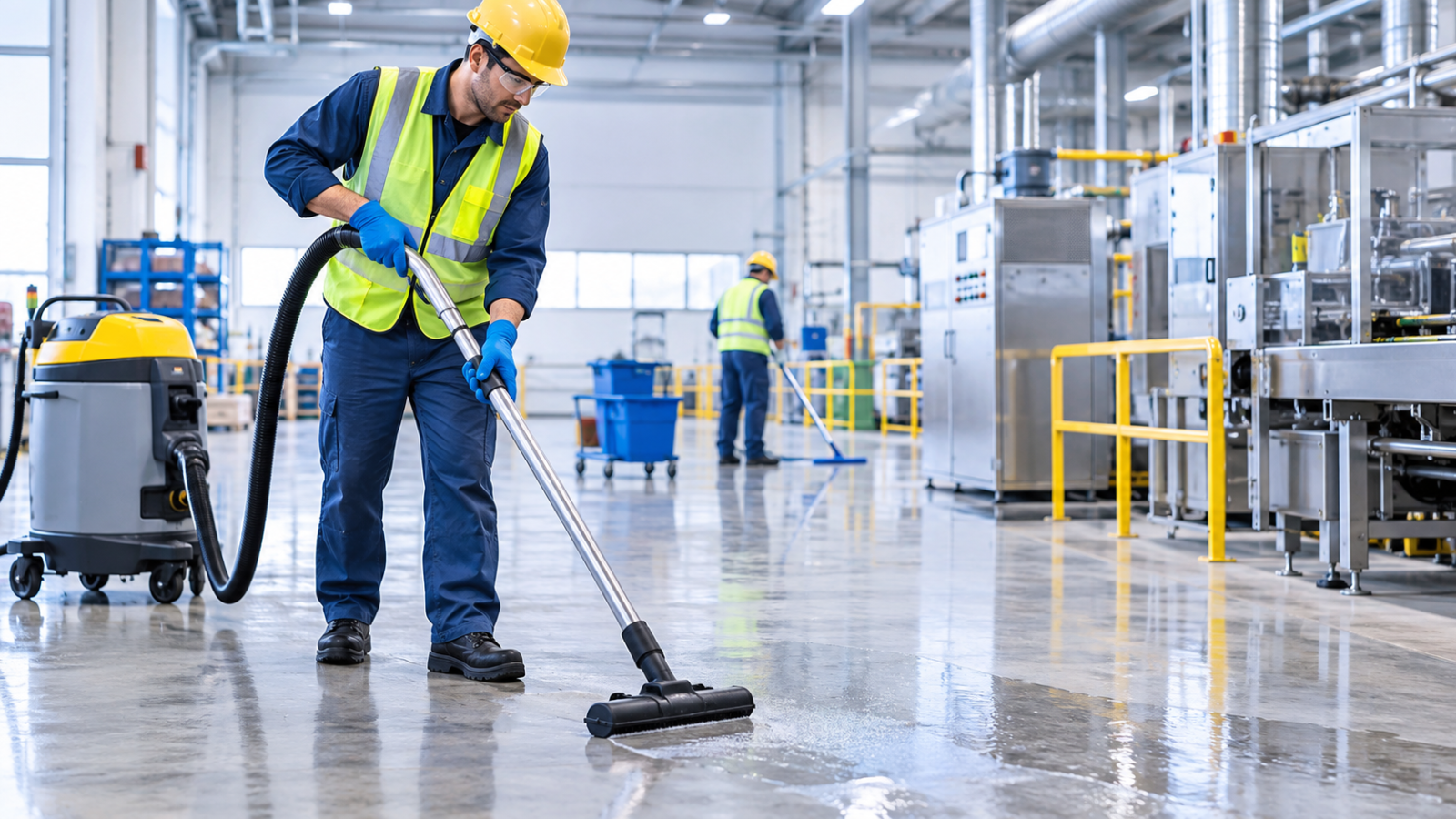
Industrial cleaning is a specialized cleaning service designed for factories, warehouses, manufacturing plants, and large commercial facilities. It focuses on removing heavy dirt, grease, dust, chemicals, production waste, and other contaminants that normal cleaning services cannot handle.
Unlike standard office cleaning, industrial cleaning requires specialized equipment, trained professionals, and industry-specific methods. Businesses use these services to maintain safe workplaces, protect machinery, improve productivity, and meet industry standards.
Manufacturing companies, warehouses, food processing facilities, automotive plants, and industrial businesses depend on professional cleaning solutions to keep their operations running efficiently.
A clean industrial environment is not only about appearance. It directly affects employee safety, equipment performance, product quality, and long-term business success.
Table of Contents
ToggleWhat Is Industrial Cleaning?
Industrial cleaning refers to the professional cleaning and maintenance of industrial facilities, equipment, production areas, and large-scale business environments.
It involves removing industrial contaminants such as oil, grease, dust, chemicals, metal particles, and manufacturing residue.
Industrial cleaning companies use advanced tools, specialized cleaning products, and trained workers to handle complex cleaning tasks safely.
The main goal is to create a cleaner, safer, and more efficient workplace for businesses.
Why Does Industrial Cleaning Exist?
Industrial facilities experience heavy use every day. Manufacturing processes, machinery operations, and material handling create dirt and waste that require professional solutions.
Industrial cleaning exists because traditional cleaning methods are often not enough for large industrial environments.
Businesses need specialized cleaning to:
- Maintain workplace safety
- Protect expensive equipment
- Reduce maintenance problems
- Improve operational efficiency
- Meet health and safety requirements
- Create better working conditions
For example, a manufacturing plant may collect oil, metal dust, and grease around production machines. Professional industrial cleaning removes these contaminants and helps prevent operational issues.
How Does Industrial Cleaning Work?
Professional industrial cleaning follows a planned process to ensure effective and safe results.
Each facility has different requirements, so cleaning companies usually create customized solutions based on the business type.
Facility Inspection and Assessment
The first step of industrial cleaning is evaluating the facility.
A professional cleaning company examines:
- Facility size
- Type of industry
- Equipment condition
- Cleaning challenges
- Safety requirements
- Required cleaning frequency
This assessment helps create an effective cleaning plan.
Creating a Customized Cleaning Plan
After inspection, the cleaning provider develops a service plan based on business needs.
The plan usually includes:
- Cleaning schedules
- Required equipment
- Cleaning methods
- Safety procedures
- Areas requiring attention
A warehouse may require regular floor cleaning, while a factory may need detailed machinery cleaning.
Preparing Equipment and Safety Measures
Industrial cleaning requires specialized equipment and safety preparation.
Common equipment includes:
- Industrial vacuum systems
- Pressure washers
- Floor scrubbers
- Steam cleaners
- High-reach cleaning tools
Workers also use protective equipment such as gloves, safety glasses, and protective clothing.
Performing the Cleaning Process
Once preparation is complete, trained workers perform the cleaning tasks.
Common activities include:
- Removing dust and debris
- Cleaning machinery
- Removing grease and oil
- Sanitizing production areas
- Cleaning industrial floors
- Managing waste materials
The cleaning process depends on the facility type and business requirements.
Quality Inspection
After completing the cleaning process, supervisors inspect the work.
Quality checks help ensure:
- Cleaning standards are achieved
- Safety requirements are followed
- Customer expectations are met
Professional companies often use checklists and reports to maintain consistent quality.
Key Characteristics of Professional Industrial Cleaning
Industrial cleaning services have several features that make them different from regular cleaning.
Specialized Knowledge
Industrial cleaning requires knowledge of different industries and their specific challenges.
A food processing facility requires different cleaning methods compared with an automotive factory.
Professional cleaners understand:
- Equipment requirements
- Safety procedures
- Industry standards
- Proper cleaning techniques
Advanced Cleaning Equipment
Industrial facilities require powerful equipment because they contain heavy contamination and large working areas.
Common tools include:
- Industrial vacuum cleaners
- Commercial pressure washers
- Automatic floor scrubbers
- Industrial steam cleaners
These tools improve cleaning efficiency and reduce manual effort.
Safety-Focused Operations
Safety is one of the most important parts of industrial cleaning.
Professional companies follow safety practices to protect:
- Employees
- Cleaning workers
- Equipment
- Business operations
Proper training helps prevent accidents and workplace hazards.
Customized Service Solutions
Every industrial facility has different cleaning requirements.
Cleaning companies create customized plans based on:
- Industry type
- Facility size
- Production activities
- Cleaning frequency
- Safety needs
Types of Industrial Cleaning Services
Industrial cleaning includes different services designed for various business environments.
Factory Cleaning Services
Factory cleaning focuses on maintaining manufacturing facilities.
It includes:
- Production area cleaning
- Machine cleaning
- Floor maintenance
- Dust removal
- Waste removal
A clean factory helps improve safety and production efficiency.
Warehouse Cleaning Services
Warehouses require regular cleaning because of constant movement of products, employees, and equipment.
Warehouse cleaning services include:
- Floor cleaning
- Storage area cleaning
- Loading dock cleaning
- Dust removal
- Waste management
Clean warehouses reduce workplace hazards and improve organization.
Industrial Equipment Cleaning
Machinery represents a major investment for businesses.
Equipment cleaning removes:
- Oil buildup
- Grease
- Dust
- Production residue
Regular equipment cleaning can improve machine performance and reduce maintenance costs.
Food Processing Cleaning
Food processing facilities require strict hygiene standards.
Industrial cleaning services help maintain:
- Sanitation levels
- Production cleanliness
- Food safety requirements
These services may include equipment sanitation and production area cleaning.
Chemical Plant Cleaning
Chemical plants require specialized cleaning because they may contain hazardous materials.
Professional cleaners follow strict procedures for:
- Chemical handling
- Safety protection
- Waste disposal
- Contamination control
Industrial Floor Cleaning
Industrial floors experience heavy traffic from workers, vehicles, and machinery.
Floor cleaning services include:
- Pressure washing
- Scrubbing
- Stain removal
- Surface maintenance
Clean floors improve workplace safety and appearance.
Industries That Need Industrial Cleaning Services
Many industries depend on professional industrial cleaning solutions.
| Industry | Cleaning Requirements |
|---|---|
| Manufacturing | Machinery, production areas, floors |
| Warehousing | Storage areas, loading zones |
| Automotive | Grease removal, equipment cleaning |
| Food Processing | Sanitation and hygiene cleaning |
| Pharmaceuticals | Controlled environment cleaning |
| Energy | Plant maintenance cleaning |
| Construction | Industrial site cleanup |
| Transportation | Facility and equipment cleaning |
Examples of Industrial Cleaning in Real Businesses
A car manufacturing plant may use industrial cleaning services to remove oil, metal particles, and production waste from assembly areas.
A food production company may require daily sanitation services to maintain hygiene standards.
A warehouse may schedule regular industrial cleaning to keep floors, storage areas, and loading zones safe.
These examples show how industrial cleaning supports different business operations.
Importance of Industrial Cleaning for Businesses
Industrial cleaning plays an important role in business operations.
It supports safety, productivity, maintenance, and customer confidence.
Improves Workplace Safety
A clean facility reduces risks caused by:
- Slippery floors
- Dust buildup
- Waste materials
- Unsafe working conditions
A safer workplace protects employees and reduces operational problems.
Protects Business Equipment
Industrial equipment requires proper maintenance.
Cleaning helps:
- Prevent damage
- Improve efficiency
- Extend equipment life
- Reduce repair costs
Improves Productivity
Employees work better in organized and clean environments.
Industrial cleaning helps businesses maintain efficient operations by reducing workplace disruptions.
Supports Business Reputation
A clean facility creates a positive impression among:
- Customers
- Employees
- Investors
- Business partners
Professional facilities reflect strong business management.
Industrial Cleaning vs Commercial Cleaning
| Feature | Industrial Cleaning | Commercial Cleaning |
|---|---|---|
| Main Focus | Industrial facilities and equipment | Offices and business spaces |
| Environment | Factories, plants, warehouses | Offices, stores, schools |
| Equipment | Heavy-duty tools | Standard cleaning tools |
| Training | Specialized industrial training | General cleaning training |
| Complexity | High | Moderate |
Industrial cleaning requires more specialized knowledge because industrial environments involve machinery, chemicals, and production processes.
Advantages and Disadvantages of Industrial Cleaning
Advantages
Better Workplace Safety
Professional cleaning reduces hazards and creates safer working conditions.
Equipment Protection
Regular cleaning helps protect expensive machinery and reduce maintenance expenses.
Higher Productivity
Clean facilities allow employees to work more efficiently.
Regulatory Compliance
Industrial cleaning helps businesses meet safety and cleanliness requirements.
Disadvantages
Higher Cost
Industrial cleaning is more expensive than basic cleaning because it requires specialized equipment and trained workers.
Requires Planning
Large cleaning projects may require scheduling to avoid interrupting operations.
Requires Experienced Providers
Businesses must carefully select cleaning companies with proper knowledge and experience.
How to Choose an Industrial Cleaning Company
Choosing the right provider is important for maintaining quality and safety.
Check Industry Experience
Businesses should select companies that understand their specific industry.
Experience with similar facilities improves service quality.
Review Safety Standards
Ask about:
- Worker training
- Safety procedures
- Insurance coverage
- Equipment handling
Evaluate Services Offered
A professional company should clearly explain:
- Cleaning methods
- Equipment used
- Service schedules
- Quality checks
Compare Pricing
Businesses should compare value, not only price.
The cheapest option may not always provide the quality and reliability needed.
How to Start an Industrial Cleaning Business
Industrial cleaning can be a profitable service business opportunity for entrepreneurs.
Research the Market
Understand:
- Local demand
- Target industries
- Competitors
- Customer needs
Create a Business Plan
A plan should include:
- Services
- Pricing
- Equipment costs
- Marketing strategy
- Growth goals
Invest in Equipment
Important equipment includes:
- Industrial vacuums
- Pressure washers
- Floor machines
- Safety equipment
Train Employees
Workers should understand:
- Cleaning procedures
- Safety practices
- Equipment operation
- Customer service
Build Business Relationships
Successful industrial cleaning companies often grow through long-term contracts with businesses.
Networking with facility managers and companies can create new opportunities.
Common Mistakes to Avoid
Choosing Only Based on Price
Low prices may result in poor quality service.
Businesses should focus on experience and reliability.
Ignoring Safety Requirements
Industrial environments require proper safety procedures.
Ignoring safety can create serious risks.
Hiring Inexperienced Cleaners
Industrial facilities require trained professionals who understand complex cleaning needs.
Not Creating a Cleaning Schedule
A clear schedule helps maintain consistent facility standards.
Frequently Asked Questions About Industrial Cleaning
What Is Industrial Cleaning?
Industrial cleaning is a professional service that cleans and maintains factories, warehouses, machinery, and industrial facilities using specialized equipment and techniques.
Why Is Industrial Cleaning Important?
Industrial cleaning helps businesses improve safety, protect equipment, maintain productivity, and meet industry standards.
What Are Common Industrial Cleaning Services?
Common services include factory cleaning, warehouse cleaning, equipment cleaning, floor cleaning, food processing sanitation, and industrial waste removal.
How Often Should Industrial Facilities Be Cleaned?
Cleaning frequency depends on the industry, facility size, and operational requirements. Some businesses need daily cleaning, while others require weekly or scheduled maintenance.
What Equipment Is Used for Industrial Cleaning?
Industrial cleaning companies use equipment such as pressure washers, industrial vacuums, floor scrubbers, steam cleaners, and specialized cleaning systems.
Can Small Businesses Use Industrial Cleaning Services?
Yes. Small manufacturing companies, workshops, and storage facilities can benefit from professional industrial cleaning services.
How Much Does Industrial Cleaning Cost?
Costs depend on facility size, cleaning requirements, service frequency, equipment needs, and labor requirements.
What Is the Difference Between Industrial and Commercial Cleaning?
Industrial cleaning focuses on factories, machinery, and heavy-duty environments, while commercial cleaning focuses on offices, stores, and general business spaces.
Conclusion
Industrial cleaning is an essential service for businesses that operate factories, warehouses, plants, and other industrial facilities.
It helps companies maintain safe workplaces, protect equipment, improve productivity, and create efficient operations.
Professional industrial cleaning requires specialized knowledge, advanced equipment, and trained workers who understand complex business environments.
For businesses, investing in reliable industrial cleaning services can reduce risks and improve long-term performance.
For entrepreneurs, the industrial cleaning industry offers opportunities to build a valuable service business by providing reliable solutions to companies that need professional facility maintenance.
No related posts.
